Do a little less for the climate
About the project
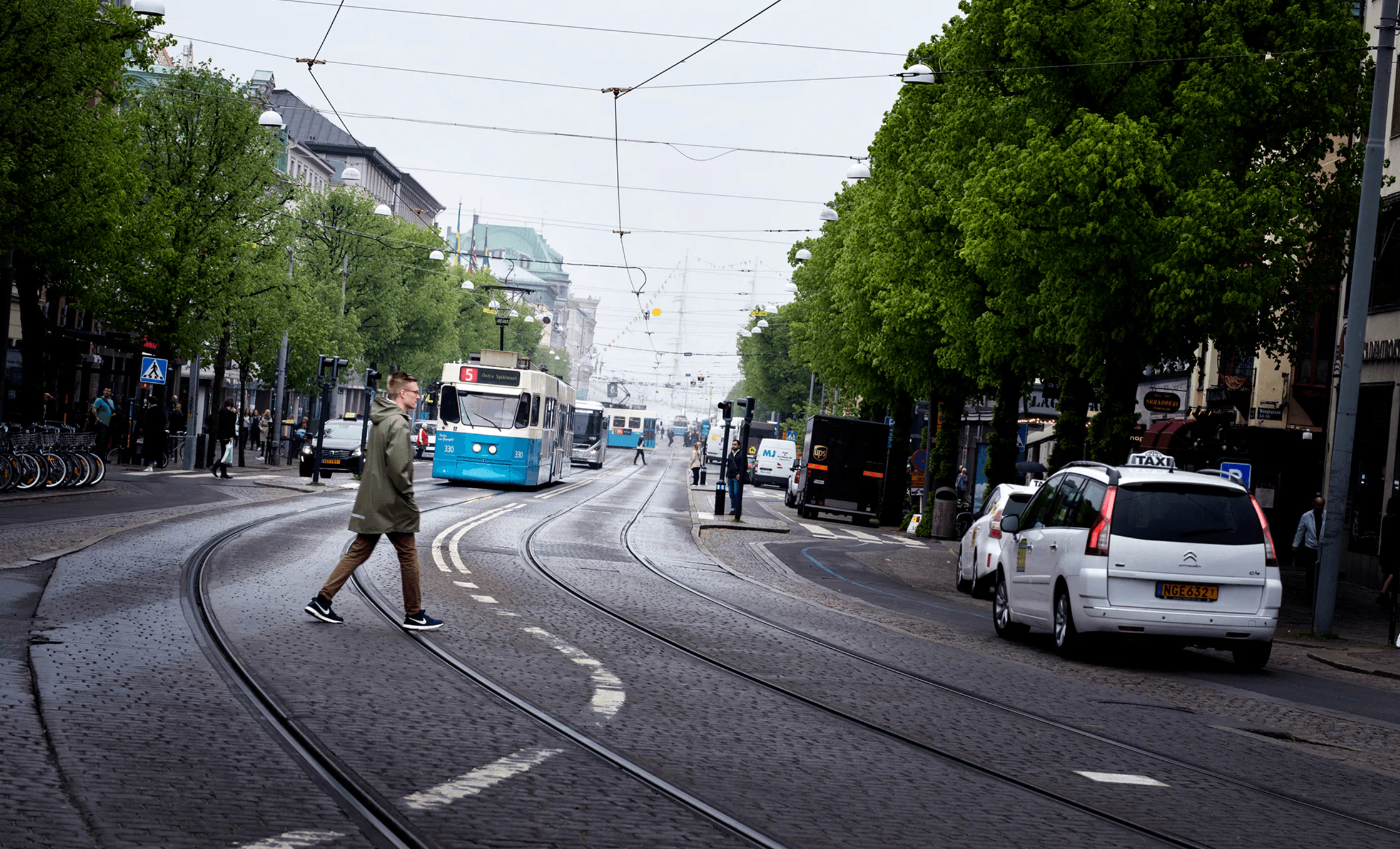
Göteborg Energi wanted to get more Gothenburg residents to reflect on their energy use and get involved in the transition to a more sustainable society.
services
Strategy
,
Communication
client
Göteborg Energi

Concept
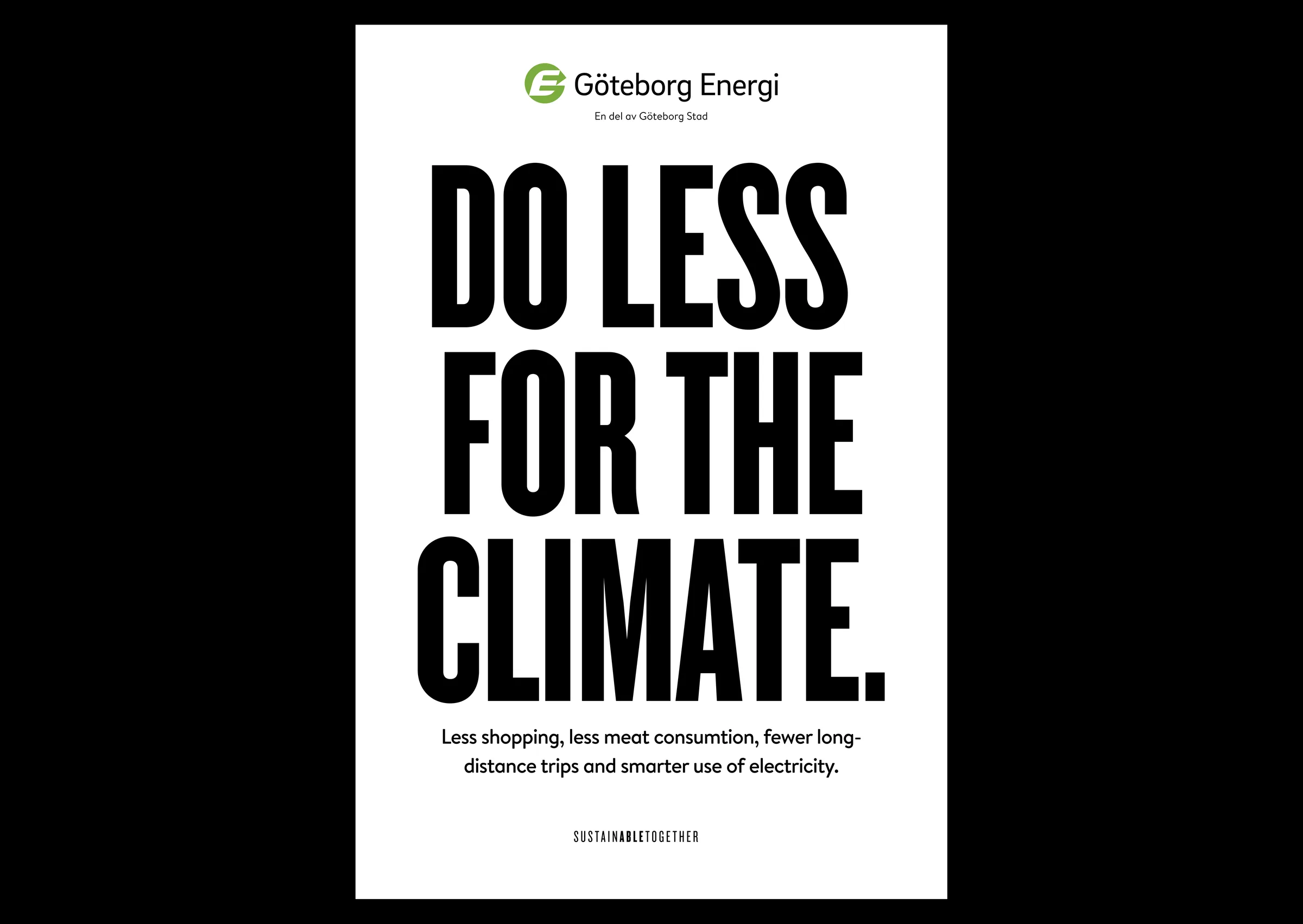
With “Do less for the climate” (Gör mindre för klimatet), we turned the usual call to do more on its head. Instead, Gothenburgers were encouraged to consume less, travel less, eat less meat, and use electricity more smartly. A simple and unexpected message that made a complex climate issue easier to digest.
Effect
71 percent noticed the campaign, 96 percent understood the message, and 47 percent were positive about it. At the same time, Gothenburgers reduced their electricity use by 17 percent. The campaign also achieved international reach, including through French TéléMatin and in connection with COP28.
FAQ
What is a message platform?
Your narrative, your core messages, and your tone of voice gathered so that the entire organization can use them. It determines what you say, before the choice of channels determines where.
In practice, it is a short document: what you do, for whom, why it matters, and what evidence you rely on. Plus what it sounds like when a salesperson, a recruiter, and a CEO say the same thing in their own words.
The benefit becomes apparent when several people need to communicate at the same time. Without a platform, every initiative becomes a new negotiation about what applies. With it in place, work goes faster and the messages remain cohesive over time.
Read more
We already have a brand platform, do we need this?
Often, yes. The brand platform says who you are; the communication strategy says how you tell it, and to whom.
Brand work usually stops at position, promise, and values. This is the right basis, but it says nothing about which target groups should be reached first, which issues you should own in the debate, or what you should answer when someone questions you.
We therefore start with what you already have. If the platform holds, we build on it. If it does not match reality, we say so, with a proposal for what needs to be adjusted.
Read more
How do we start?
With a conversation about the current situation. Then we say what is needed. Sometimes it is less than you think.
The conversation is about where you stand, what you have tried, and what is causing the friction. We would love to see what you have already produced, regardless of how finished it is. That tells us more than a brief.
After that, you will receive a recommendation: a proposal for the first step, what it means in terms of time, and how much it costs. If you choose to do it yourself from there, the material is yours to use.
Read more